If you care about architecture, New Canaan tends to stand out quickly. Few towns offer such a concentrated design story, where historic character, mid-century innovation, and contemporary cultural spaces all shape the experience of living there. If you are wondering why this Fairfield County town keeps drawing design-minded buyers, you will find the answer in its built environment, preservation culture, and range of home styles. Let’s dive in.
New Canaan’s design identity runs deep
New Canaan’s reputation did not happen by accident. In the postwar years, the Harvard Five, Marcel Breuer, Landis Gores, John Johansen, Eliot Noyes, and Philip Johnson, established the town as an important center of experimental Modern residential design.
That legacy became especially visible when Philip Johnson completed the Glass House in 1949. The project drew national attention, and by the end of the 1970s, more than 100 modern houses had been built in New Canaan.
Connecticut’s historic preservation plan describes New Canaan as home to one of the most significant collections of mid-century modern houses in the United States. A documented survey identified 91 Modernist houses, and 18 were later included in the first statewide thematic National Register listing for modern residential architecture.
Why New Canaan feels different
A lot of suburbs have attractive homes. New Canaan feels different because its design culture is not just part of the past. It is still actively interpreted, preserved, and shared with the public.
The New Canaan Museum & Historical Society runs Modern New Canaan, a broad initiative focused on the town’s modern legacy. It also presents Modern House Day and October4design, a 10-day celebration centered on architecture, art, and design.
Those programs matter because they help keep the town’s architectural identity visible. The museum has said these efforts grew in part from concern over demolitions in the 1990s and early 2000s, and that many houses once at risk were later purchased and restored.
For buyers, that creates a different kind of market atmosphere. You are not just looking at isolated homes. You are stepping into a place where design has community value and where notable architecture has been documented, toured, and protected over time.
The Glass House shapes the town’s appeal
The Glass House is one of the clearest reasons New Canaan holds such a strong place in the design conversation. Located in New Canaan, the site spans 49 acres and includes 14 structures.
Its timeline also gives you a sense of how deliberate this legacy was. Philip Johnson first visited the site in 1945, acquired the initial acreage in 1946, and completed the Glass House and Brick House in 1949.
Today, the Glass House describes its role as a catalyst for the preservation and interpretation of modern architecture, landscape, and art. That influence reaches beyond one property and helps reinforce New Canaan as a destination for people who care about thoughtful design.
Design landmarks extend beyond one house
New Canaan’s architectural identity is broader than a single famous address. The New Canaan Museum & Historical Society maintains 11 museums and historical sites, including the 1764 Hanford-Silliman House and the 1960 Gores Pavilion.
The museum also notes that the Glass House, the Gores Pavilion, and the Hodgson House are among the town’s National Register-listed modern houses. Rogers Studio, along with the Glass House, is recognized as one of the town’s two National Historic Landmarks.
That range is part of the appeal. You can see early American history, important modernist work, and preserved design landmarks all within one town. For a buyer who values architecture, that creates a richer and more layered sense of place.
Grace Farms adds a contemporary note
New Canaan’s design appeal is not limited to the mid-century era. Grace Farms adds a contemporary architectural dimension that keeps the town’s design identity current.
Grace Farms describes itself as a cultural and humanitarian center on 80 acres in New Canaan. The property is organized around the SANAA-designed River building and Barns, with open architecture intended to encourage exploration.
The River building was designed to blend with the landscape, which is a theme that connects naturally with many modernist ideas. For design lovers, Grace Farms reinforces the sense that New Canaan is not simply preserving architecture. It is also participating in an ongoing design conversation.
Home styles offer more variety than many expect
One of the most interesting things about New Canaan is that it is not a one-style town. Even though modern architecture gets much of the attention, the documented building stock shows a much broader mix.
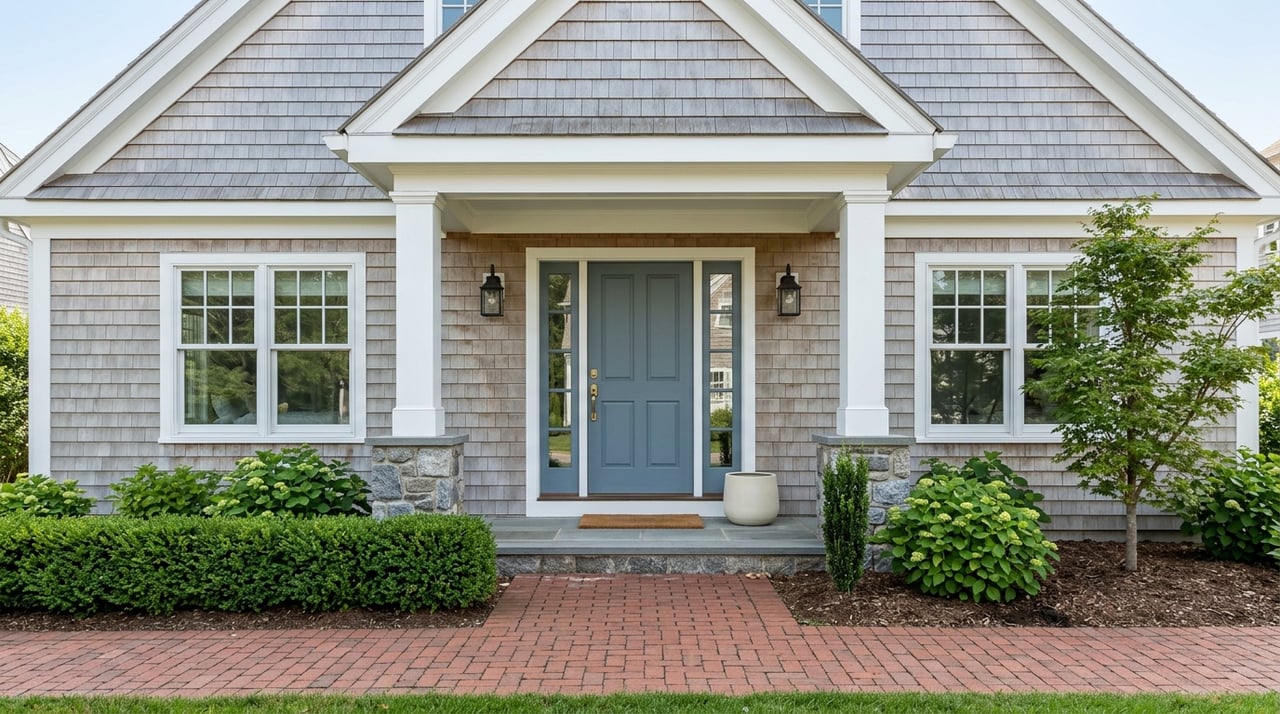
Official historic district documentation records Federal, Greek Revival, Gothic Revival, and Colonial Revival styles. It also references a Georgian Cape-type dwelling and well-preserved five-bay center-entry houses from the late 18th and early 19th centuries.
Waveny Park adds another layer to that story. Its nomination includes a Tudor Revival estate house built between 1912 and 1914, as well as an earlier Colonial Revival house on the same property.
For you as a buyer, that means New Canaan can offer several architectural paths. Depending on your taste, you may be drawn to a preserved early house, a Colonial Revival property, a Tudor Revival residence, or a mid-century modern home with strong architectural lines.
Why mid-century homes still resonate
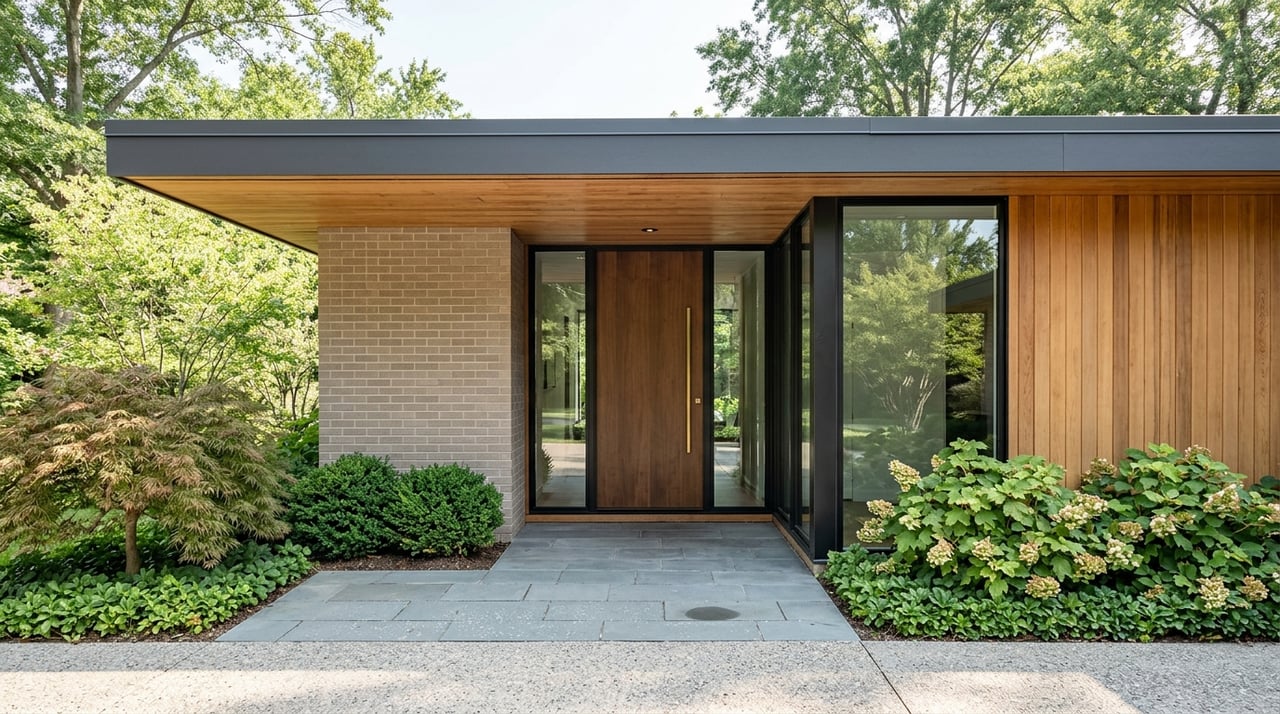
Mid-century modern houses remain a major part of New Canaan’s appeal because their design language still feels relevant. A Connecticut preservation document describes mid-twentieth-century modern architecture as a break from classical and vernacular forms.
Key characteristics include simplified forms, functional efficiency, new materials, integration with the environment, full-height glass, open plans, and a stronger indoor-outdoor relationship. Those qualities align closely with what many design-minded buyers still want today.
In practical terms, that often means cleaner sightlines, brighter interiors, and a closer connection between the home and its setting. For buyers who value architectural clarity over decorative excess, that can be a powerful draw.
What design-minded buyers often appreciate most
If you are comparing towns in Fairfield County, New Canaan offers a distinctive combination of features that can be hard to replicate elsewhere.
Some of the biggest reasons design lovers gravitate here include:
- A nationally recognized concentration of mid-century modern houses
- A well-documented architectural legacy tied to the Harvard Five
- Preservation efforts that have helped save and restore important homes
- Public-facing design programming through the local museum
- Landmark sites that span early American, modern, and contemporary architecture
- A housing landscape that includes both modernist and traditional architectural styles
That combination gives New Canaan a strong sense of identity. Instead of feeling interchangeable, the town presents a built environment with depth, continuity, and clear design character.
What this means for your home search
If architecture is part of how you define value, New Canaan deserves a close look. Design appeal here is not only about prestige or name recognition. It is also about how a town’s history, preservation priorities, and cultural institutions shape the experience of ownership.
That can matter whether you are searching for a standout modern house or a more traditional property in a town with design credibility. In both cases, you are buying into a setting where architecture has long been taken seriously.
For buyers coming from Manhattan or elsewhere in the region, that can make New Canaan especially compelling. You may find the space and privacy you want without giving up the visual and cultural richness that often matters to design-focused households.
If you are considering New Canaan or other Fairfield County towns and want a more tailored view of where design, lifestyle, and market opportunity intersect, Carla Kupiec offers a private, highly personalized approach to your search.
FAQs
Why do design lovers like New Canaan so much?
- New Canaan is known for its unusually strong concentration of mid-century modern architecture, especially the legacy of the Harvard Five, along with an active preservation culture and public design programming.
Is New Canaan only known for modern homes?
- No. Historic documentation shows a mix of Federal, Greek Revival, Gothic Revival, Colonial Revival, Tudor Revival, and mid-century modern architecture.
What makes New Canaan different from other suburban towns?
- Its architectural identity is reinforced by major landmarks, preservation efforts, museum programming, and contemporary design destinations such as Grace Farms.
Why is the Glass House important to New Canaan?
- The Glass House helped bring national attention to New Canaan’s modern design legacy and continues to support the preservation and interpretation of modern architecture, landscape, and art.
Are there preserved historic properties in New Canaan beyond modernist homes?
- Yes. The town’s documented sites include early houses, historic district architecture, and properties such as the Hanford-Silliman House and Waveny Park that reflect other important architectural periods.